No, a standard renters policy only covers the named insured. Your roommate isn't automatically protected unless they're listed on the declarations page. Most unrelated roommates should carry their own policies rather than share one. Before you assume anything, pull out your policy's declarations page or call your agent today and confirm exactly who's covered.
TL;DR:
- Most renters policies only cover the named insured, requiring roommates to carry their own policies unless the insurer explicitly allows shared coverage.
- Sub-limits on jewelry, electronics, and cash can leave roommates with significant gaps in coverage for high-value or shared items.
- Adding or removing a roommate on a renters policy requires direct contact with the insurer and proper documentation to avoid coverage gaps or claim delays.
- Sharing a policy may save a few dollars but can negatively impact future premiums and complicate claims if disputes arise.
- An independent insurance agency can quickly clarify carrier rules, help with scheduling high-value items, and assist in setting up appropriate coverage for your household.
Table of Contents
- What Does Renters Insurance for Roommates Actually Cover?
- Can Roommates Share a Renters Policy?
- Separate Policies vs. Shared Policy: What's Really at Stake?
- How to Add or Remove a Roommate From a Renters Policy
- What Does Renters Insurance Cost When You Split It With Roommates?
- A Practical Checklist for Roommates Setting Up Coverage
- Why an Independent Agent Beats Guessing on Roommate Coverage
- Get Roommate Coverage Sorted Without the Back and Forth
- Sources
- FAQ
What Does Renters Insurance for Roommates Actually Cover?
A standard renters policy protects three things: your personal property, your liability if someone gets hurt in your unit, and additional living expenses (ALE) if you're temporarily displaced after a covered loss like a fire. All three attach to the named insured on the policy, not to everyone who lives at the address.
That distinction matters because coverage doesn't extend to roommates automatically. Insurers write policies around named insureds and, in some cases, resident relatives. A college roommate or a friend you found on a housing app usually doesn't qualify as a resident relative, no matter how long you've lived together.
Sub-limits also trip people up in shared housing. Most policies cap payouts for:
- Jewelry, often $1,000 to $2,500 total
- Electronics and computers, sometimes limited well below their replacement cost
- Bicycles and cash, frequently capped at a few hundred dollars
If you and three roommates own a combined $8,000 in laptops, a shared policy's sub-limit could leave a serious gap.
Can Roommates Share a Renters Policy?
Some insurers allow it, but the rules shift depending on the relationship and the carrier. Understanding the terminology helps you ask the right questions when you call.
- Named insured means you're fully covered under the policy for property and liability. Adding a second named insured is possible with many carriers, though insurer treatment differs between spouses and domestic partners compared with unrelated roommates.
- Additional insured extends narrower protection, often just liability, without folding that person's belongings into the coverage limit.
- Interested party applies to landlords, not roommates. It only means your landlord gets notified if the policy lapses or cancels. It grants no coverage rights.
Because rules vary by company and by state, don't assume your last apartment's arrangement carries over. Call your agent, describe your living situation exactly (unrelated roommate, partner, sibling), and ask which structure your specific carrier permits before you sign a lease that assumes shared coverage.
Separate Policies vs. Shared Policy: What's Really at Stake?
The math on cost savings looks tempting until you factor in the downside. Splitting one policy might save each roommate a few dollars a month, but it links your financial history to someone else's behavior for years.
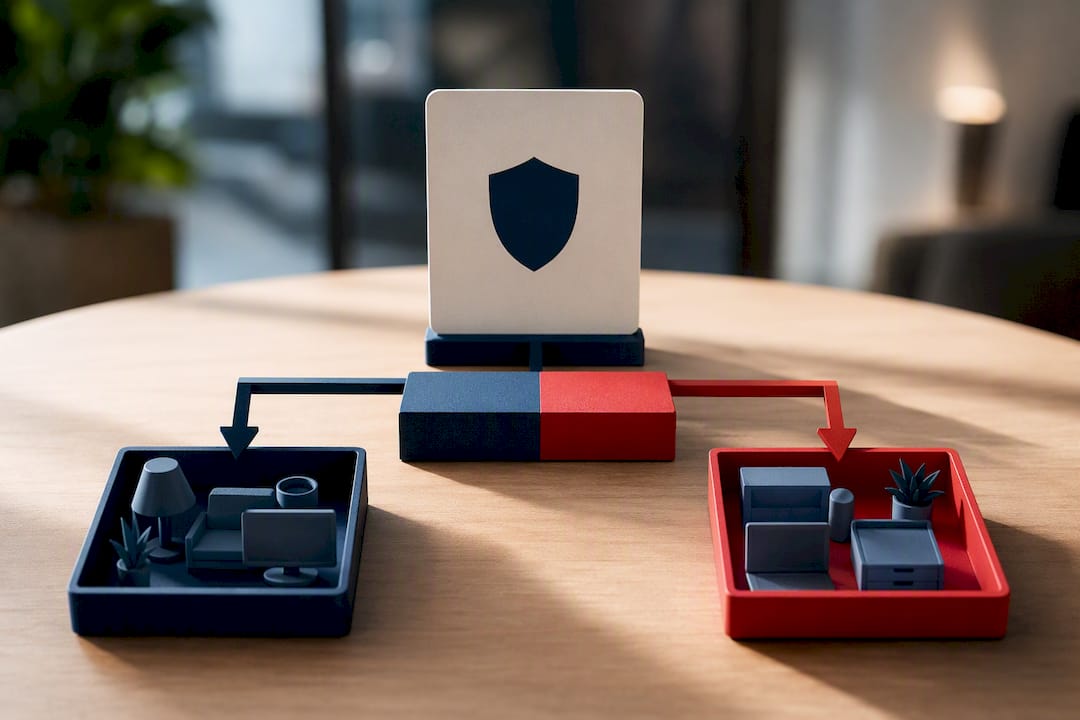
Here's what changes when you share:
- Claims history follows the policy, so if your roommate files a claim, both of your future premiums can rise.
- Payout checks on a shared claim are often issued jointly, which can mean both names on the check and both signatures required to cash it.
- Disagreements over whether to even file a claim can delay the whole process, since one person's decision affects the other's record.
Sharing can work reasonably well for long-term partners with low combined property value and high mutual trust. It rarely works for roommates who met on a listing site six months ago.
Pro Tip: If you do share a policy, put the deductible split and payout division in writing before you ever need to file a claim. Waiting until after a loss to negotiate is how friendships end.
How to Add or Remove a Roommate From a Renters Policy
Coverage changes aren't automatic. You have to initiate them, and delays create gaps that leave someone unprotected.
- Call your insurer or agent directly rather than emailing, since adding someone typically requires their full name, their relationship to you, and often proof of residency like a lease copy or ID.
- Request either a co-insured endorsement (full coverage for that person) or an interested-party notation if it's your landlord who needs updating, not a roommate.
- Get the updated declarations page in writing before you consider the change effective.
- When a roommate moves out, remove them the same day if possible. Until the paperwork clears, they may retain claims rights on the policy.
What Does Renters Insurance Cost When You Split It With Roommates?
The average renters insurance premium runs around $151 a year, or roughly $13 a month. Split three ways, that's about $4 per person monthly. It's a small number, and that's exactly the problem: the savings rarely justify the claims-history risk you're taking on.
Separate policies make more sense when:
- You and your roommates own significantly different amounts of property
- One roommate has a spotty claims history that could raise everyone's rate
- Your landlord requires individual proof of coverage per tenant, which many leases now specify
If you own anything genuinely valuable, an engagement ring, a musical instrument, a bike worth more than a few hundred dollars, a scheduled personal property endorsement covers it above standard sub-limits regardless of what your roommates carry.
A Practical Checklist for Roommates Setting Up Coverage
Before you sign a lease together, walk through this list as a group:
- Confirm with each insurer whether unrelated roommates can be added, and get the answer in writing
- Decide: individual policies for everyone, or one shared policy with clear terms
- Photograph or video every room and its contents, dated and time stamped
- Keep purchase receipts for big-ticket items in a shared folder
- Agree on the deductible split and payout division before anyone needs to file
A short written roommate agreement should cover who pays the deductible, how any payout gets divided, how much notice someone gives before moving out, and what happens if a roommate stops paying their share of premiums.
After a loss actually happens, move fast:
- Document the damage with photos immediately
- Notify your insurer the same day
- Pull your receipts and inventory records
- Call your agent if the claim involves shared property or multiple names on the policy
Why an Independent Agent Beats Guessing on Roommate Coverage
Roommate insurance questions rarely have a one-size answer. Rules change by carrier, by state, and by whether your roommate is a partner, a sibling, or someone you met three months ago on an apartment app. An independent insurance agency has worked with families and renters since 1996, with access to multiple top-rated carriers and same-day responses to questions like these.
Call an agent directly when you're dealing with a complicated inventory, you need a landlord notified as an interested party, or you're trying to remove a departing roommate before their next rent payment is due. Those situations reward a real conversation over a guess.
— Nathan Higham
Get Roommate Coverage Sorted Without the Back and Forth
An independent agency gives roommates a faster path than calling five insurers separately to compare rules on adding names, sub-limits, and interested parties. Such agencies often compare quotes across companies at no extra cost and provide timely responses when you need an answer before your lease deadline.

Whether you and your roommates decide on separate policies or a carefully documented shared one, an agent can walk through your specific carrier's rules on named insureds, help schedule high-value items like jewelry or electronics beyond standard sub-limits, and confirm what your landlord actually requires as an interested party. If you're unsure which setup fits your household, request a renters insurance quote and get a straight answer instead of piecing one together from five different websites.
Sources
For deeper verification, consult the Insurance Information Institute's renters insurance data and NAIC's homeowners and renters reports on premium trends and coverage prevalence.
This article is general information, not a substitute for advice from a qualified financial advisor. Consult a qualified financial professional about your own circumstances before acting on anything here.
- Can You Share Renters Insurance With My Roommate? — NerdWallet
- Renters insurance with roommates — Forbes Advisor
FAQ
How Does Renters Insurance Work When You Have Roommates?
Each roommate's coverage depends entirely on whether they're named on the policy. If only one person is listed as the insured, that person's belongings and liability are covered, but a roommate who isn't named has no protection under that policy at all.
What Happens if I Have Renters Insurance but My Roommate Doesn't?
Your policy protects your own property and liability, but it does nothing for your roommate's belongings or their personal liability. If their laptop gets stolen or they accidentally start a kitchen fire, they'd need their own policy or renters coverage to be protected.
Does Each Occupant Need Their Own Renters Insurance?
It's not legally required in most cases, but it's strongly advisable for unrelated roommates since coverage doesn't extend beyond the named insured. Given that average premiums run about $151 a year, separate policies cost little for the protection they add.
What Are Three Things Renters Insurance Typically Doesn't Cover?
Standard renters policies generally exclude flood damage, earthquake damage, and a roommate's belongings when that roommate isn't named on the policy. High-value items like fine jewelry or collectibles also often exceed standard sub-limits and need a separate scheduled endorsement to be fully covered.
Can an independent agency help compare roommate coverage options?
Yes. Such agencies work with multiple top-rated carriers and can help determine whether separate policies or a shared policy make more sense for your specific household, often providing timely responses to get you answers quickly.